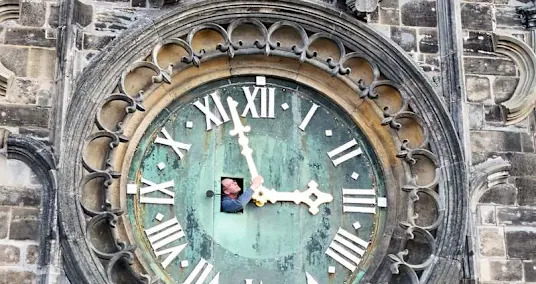
Clocks across the majority of European countries are set to go forward by one hour early on Sunday as the continent moves to daylight saving time, also known as summer time.
Clocks in most European nations including Germany advance by one hour at 2 am (0100 GMT) to 3 am, heralding longer evenings and brighter days.
This means that for the coming months parts of Europe will be on Central European Summer Time (CEST), before moving back to Central European Time (CET) in the autumn, when clocks go back again by an hour on October 25.
The aim of the change is to make better use of daylight in the shorter days of the winter in the northern hemisphere.
The signal for the automatic changeover of the clocks in Germany comes from the Federal Institute of Physics and Metrology (PTB) in the northern city of Braunschweig, also known as Brunswick in English.
The institute's experts ensure that radio-controlled clocks, station clocks and many industrial clocks are supplied with the signal via a long-wave transmitter called DCF77 in Mainflingen near Frankfurt.
LATEST POSTS
- 1
 White House responds to Sabrina Carpenter after pop star slams 'evil' ICE video using her song
 - 2The most effective method to Settle on Informed Conclusions about Senior Insuranc.
- 3Wolf bites woman in a shopping area in Germany's 2nd-biggest city
- 4Italy now recognizes the crime of femicide and punishes it with life in prison
- 5Michael Jordan donates $10M to North Carolina medical center in honor of his mother




- Top 10 Arising Advances That Will Shape What's in store
- Europe could get 42 more days of summer by the year 2100 due to climate change
- Fetterman says he's back home after a fall put the Pennsylvania senator in the hospital
- Blue Origin's next space tourism flight will break new ground for people with disabilities
- Famous Restroom Beautifying Styles For 2024
- IDF destroys Hamas shaft in northern Gaza with loaded 'ready to fire' rocket aimed at Sderot
- Step by step instructions to Protect Your Speculations with Cd Rates
- Help Your Efficiency with These Work area Updates
- German journalists' union condemns attack on reporters in village