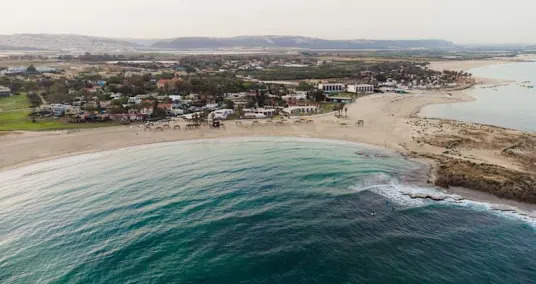
The discovery was made in an ancient shipwreck in the Dor Lagoon near the Carmel Coast, where archaeologists recovered nine pieces of unprocessed iron known as “blooms.”
Researchers from the University of Haifa said Wednesday that an underwater excavation off Israel’s northern Mediterranean coast uncovered what they described as the earliest known cargo of raw iron transported by ship, dating back around 2,600 years, Xinhua reported.
The discovery was made in an ancient shipwreck in the Dor Lagoon near the Carmel Coast, where archaeologists recovered nine pieces of unprocessed iron known as “blooms.” According to the university, the find provides direct evidence of how iron was transported in its earliest commercial stages.
The material was preserved in its original form, having solidified directly in a smelting furnace without undergoing forging or further refinement. Researchers said this distinguishes the cargo from later iron artifacts that typically show signs of shaping or tool-making.
Unlike copper and bronze, which could be melted into liquid form in ancient production processes, iron was heated with charcoal to produce a solid, porous mass. That mass was generally hammered to remove impurities and create denser material suitable for tools and implements.
The recovered blooms showed no indication of that secondary processing stage, suggesting they were transported immediately after production.

Earliest iron shipment discovered in ancient Mediterranean wreck
To determine the age and condition of the cargo, researchers conducted microscopic and chemical analyses.
Radiocarbon dating was also carried out on charred wood embedded in one of the pieces, helping confirm the timeline of the shipment. The findings were published in the journal Heritage Science.
Researchers said the cargo indicates that iron was being moved in raw form from production sites to other locations for further processing, pointing to a level of specialization in ancient manufacturing and trade networks in the Mediterranean.
The University of Haifa said the discovery provides new insight into early iron production and distribution practices in the region.
LATEST POSTS
- 1
 Are multiverses real? An astrophysicist explains why it depends on how you define ‘real’
 - 2Allow Innovative Progressions To have a Tremendous Effect
- 3Sunken warship found off Danish coast after 225 years in ‘remarkable’ discovery
- 4Promising Speculation Bearings for Portfolio Development in 2024
- 5Vote in favor of your Number one natural product




- Social Skylines d: A Survey of \Inside and out Social Experiences\ Language Learning Book
- Exemplary Fragrances: A Manual for Notorious Scents
- Figure out How to Acquire Rewarding Open Record Rewards
- ‘This year nearly broke me as a scientist’ – US researchers reflect on how 2025’s science cuts have changed their lives
- Instructions to Pick the Right Dental Embed Trained professional: An Exhaustive Aide
- 7 Countries Where You Can Buy a Home for Under $100,000
- Israel strikes Iranian nuclear development facilities, Tehran vows retaliation
- Spots To Go Birdwatching All over the Planet
- Emergent Cold LatAm opens state-of-the-art cold storage hub in Guadalajara